
Voice Search Optimization: How to Get Found When Customers Ask Siri or Alexa
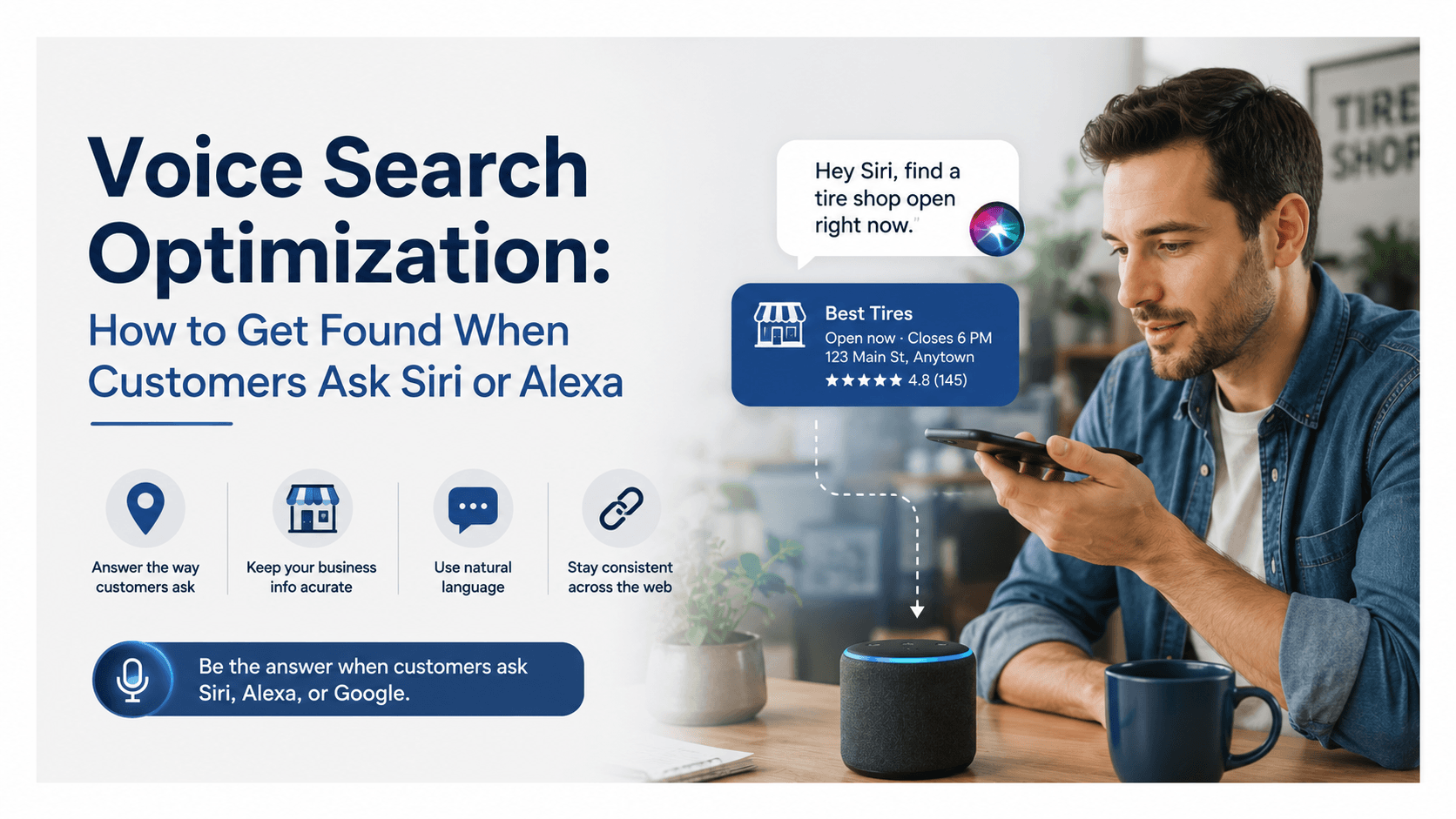
“Hey Siri, find a tire shop open right now.” That kind of question sounds simple, but a lot happens behind the scenes to determine which business actually gets named in response. As voice-activated search becomes a normal part of how people find local businesses, understanding what makes a business “voice-search friendly” is becoming genuinely useful, not just a novelty.
How Voice Search Differs From Typed Search
People tend to phrase voice searches more conversationally than typed ones. Instead of typing “tire shop hours,” someone might ask, “what time does the tire shop near me close?” This means voice assistants are often looking for direct, specific answers rather than a list of results to scroll through.
Because voice search usually returns a single answer rather than a page of options, being the business that gets named matters even more than usual.
What Actually Improves Your Chances
Accurate, current hours and location details are essential, since voice assistants pull heavily from structured data like your Google Business Profile. Clear, natural language on your website that answers common questions directly also helps, since it mirrors how people actually phrase voice queries.
Consistency across the web plays a role here too. Voice assistants favor information that’s confirmed across multiple sources rather than relying on a single, isolated listing.
Directory Listings as a Supporting Signal
Being listed accurately on relevant directories adds another confirmed source that voice assistants and AI-driven tools can reference when answering a specific, local question. A platform like bizsquadhub.com contributes to that broader pattern of consistent, verifiable information.
None of this requires reinventing your marketing approach. It’s largely an extension of the same accuracy and consistency that supports traditional local search.
Conclusion
Voice search isn’t a separate universe requiring an entirely new strategy. It rewards the same fundamentals, accurate information, clear language, and consistency across the web, just with slightly higher stakes, since it often surfaces a single answer rather than a list.
Frequently Asked Questions
Not necessarily special features, but clear, direct content helps. Answering common customer questions plainly on your website, using natural language similar to how people actually speak, tends to align well with how voice search queries are phrased.
No, voice search also happens through smart speakers and in-car assistants, not just phones. This broadens the moments when a local business might get named in response to a spoken question, beyond just someone searching on the go.
Yes, significantly. Voice assistants often pull location, hours, and contact information directly from structured data sources like Google Business Profiles, making an accurate, complete profile just as important for voice search as it is for typed search.
Yes. Voice search often favors accuracy and specificity over sheer size or budget, which levels the playing field somewhat. A small business with precise, consistent, well-maintained information can compete effectively against larger competitors.